

Traditional lash extension adhesives cure through exposure to moisture in the air. The curing process depends on humidity and temperature in the room, and full curing may take up to 24 hours. During this time, clients may experience irritation and lash artists may encounter difficulties such as extensions sticking together during application.
UV LED curing offers an alternative. The UV LED curing process hardens the special lash glue almost instantly. This reduces issues related to room temperature and humidity, also minimizes problems at the time when the glue isn't fully cured. In many cases UV LED cured lash extensions have a better retention.
UV lash curing devices emit significantly less UV radiation than natural sunlight or tanning beds, but processes are repeated, close-range and near sensitive eye tissues. In this article we look into potential risks and the necessary precautions when using UV LED curing in eyelash extension applications.
What do the “UV” and “LED” stand for?
UV is short for Ultraviolet radiation, which is electromagnetic radiation of wavelengths of 10–400 nanometers. The 400 nm is conventionally the end of UV and the beginning of the visible light spectrum. In some cases it is reasonable to consider wavelengths as high as 430nm to be in the UV range.
The term ultraviolet comes from the Latin “ultra” (meaning “beyond”) and “violet”, the highest-frequency color visible to the human eye. Much of the UV light is not visible to the human eye, but its presence can be detected by the effects it produces.
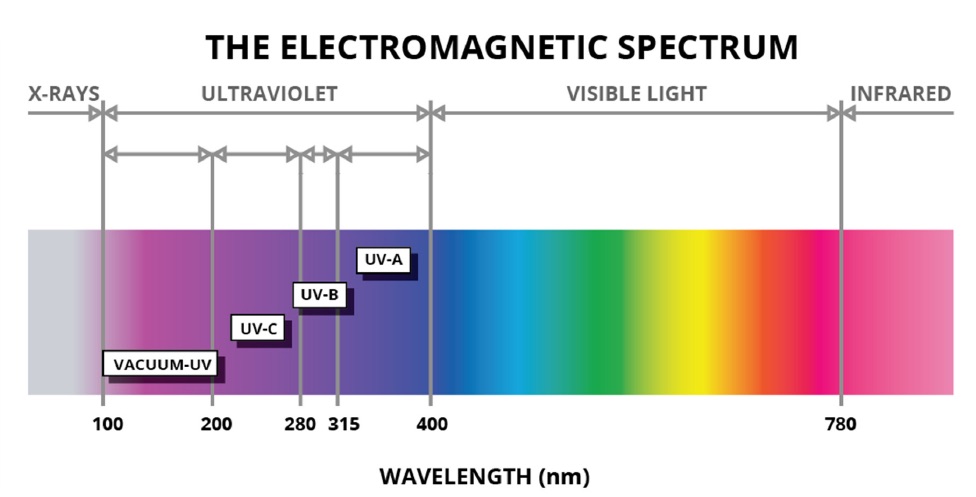
Photo: Marktechopto
LED is used for an electric light that produces light using light-emitting diodes (LEDs).
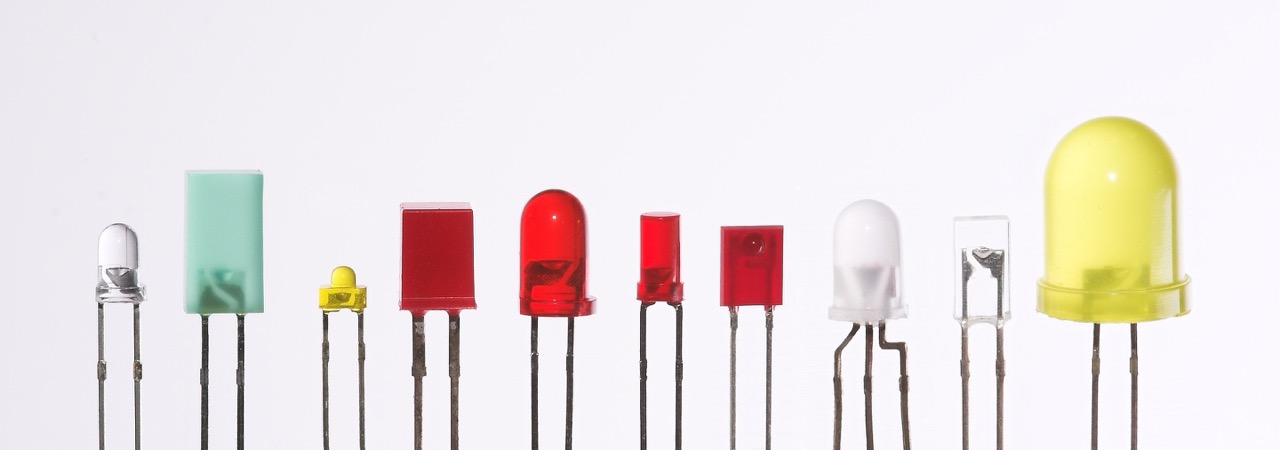
Photo: Wikipedia
How does UV LED curing work?
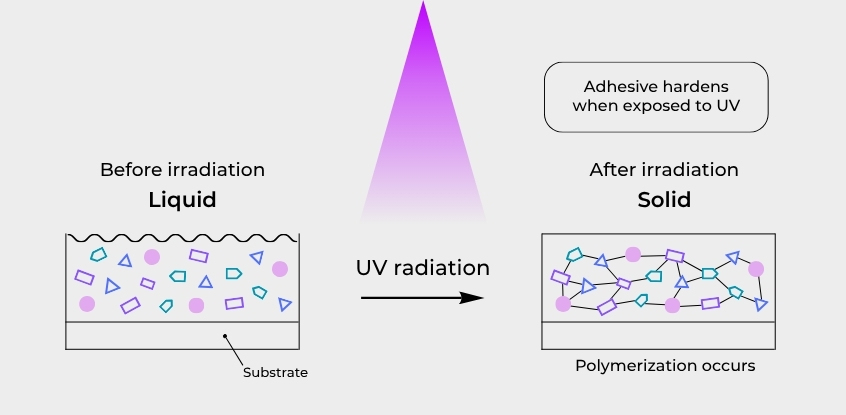
UV curing (ultraviolet curing) is a process in which ultraviolet light triggers a photochemical reaction that generates a crosslinked network of polymers. In other words, the UV light activates the UV adhesive and causes it to harden almost instantly.
The UV LED adhesives are a mix of acrylates and photoinitiators. The photoinitiators are responsible for creating reactions in the UV adhesive when exposed to radiation (UV or visible light).
In eyelash extension applications, UV LED curing shortens curing time, produces a stronger bond and improves lash retention in many cases.
Risks associated with UVA light
UV curing works best at a wavelength of 365-405 nm, which is considered soft UV or UVA. UVA is the nearest to visible light and safest of the three spectrums of UV light.
Compared to UVB and UVC, UVA has lower energy, which makes it less likely to cause immediate effects like sunburn. For this reason, it is widely used in cosmetic and medical applications.
However, UVA light can damage collagen fibers, accelerate skin aging and cause wrinkles. It can also degrade vitamin A in the skin.
UVA light has also lately been shown to indirectly damage DNA, which has been linked to an increased risk of melanoma.
The UVA exposure from UV LED curing in the lash extension procedure is very small compared with natural sunlight. But because treatments are repeated and occur near sensitive areas such as the eyes, precautions for both lash artists and clients are recommended.
Protection for lash artist
- The most important thing is not to look directly into the light source - it may damage the eye severely.
- Wearing UV protecting glasses is highly recommended. The UV light reflects back from the surfaces it is directed at and without a protective shield it may cause damage to your eyes.
UV protective glassesThe World Health Organization (WHO) recommends eye protection against UV radiation up to 400 nm. In the eyelash extension market, two main types of UV LED lamps are used: Purple light (395–400 nm) and White light (405 nm). For both types UV400 certified glasses are recommended, as they block radiation up to 400 nm. Glasses with a slightly tinted coating can also help reduce eye fatigue and irritation during longer sessions. Note: There are many glasses available with safety standard EN166/170 that provide 99.9% UV protection but only up to 380 nm. These glasses do not offer full protection against UVA rays, making UV400 certified glasses the safer choice. |
- When covering the client's eye area, it is a good idea to use matte and dark tape or patches to avoid excessive reflection. Bright and light materials reflect more light back to the artist's eye.
- Some artists like to use gloves to avoid UV light on the fingers.
- While UV LED curing is faster, adhesives still release some fumes. Make sure you work in a well-ventilated space.
- Use only certified UV curing lamps for eyelash extensions. Professional lash devices are specifically designed for safety near the eyes.
How to protect clients?
- The most important safety measure is to ensure the client’s eyes remain fully closed throughout the procedure. If needed, gently tape the eyelids to guarantee full closure, and never direct the UV light toward the open eyes.
- The client should feel comfortable at all times. As a lash artist, ask if they are feeling the heat of the lamp and if the light is not reaching into the eye between the eyelids. Also it is needed to instruct the client not to open the eyes during the treatment.
- Most of the UV LED curing devices used for eyelash extension application are safety-tested with an operating distance of 20cm. It is not recommended to place the device closer than 15-20cm from the eye. The UV exposure increases significantly when the distance is reduced.
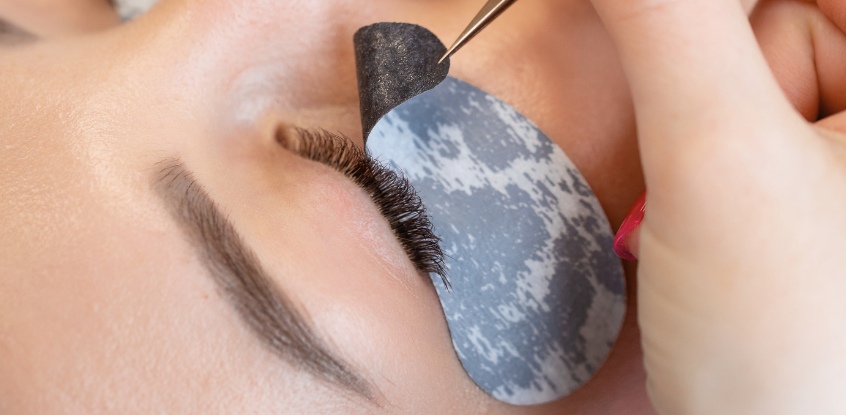
- To protect the skin around the eyes, use the tape or gel patches. When using thinner tapes, two layers might be needed for better protection. Most of the gel patches in the market block the majority of the light.
- It is easy to test the tapes and patches under the light holding them in your hands under the light.
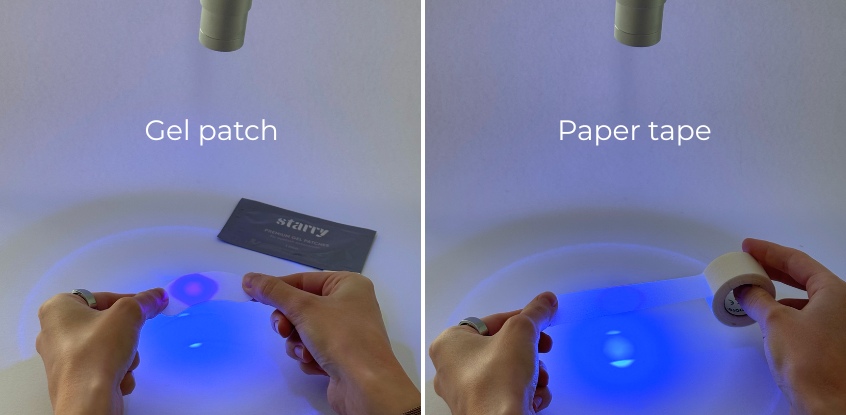
- Use the lens in a minimal size position to keep the UV light on the protected area.
- Dark, matte tapes or patches do not fully block the light, but they may help reduce light reflection around the eye area and back toward the artist’s eyes when compared with lighter and shinier materials.
|
Consider using our DARK GREY gel patches. These patches help protect the under-eye area and reduce light reflection. Thanks to their matte dark grey color, light is absorbed rather than reflected, making the working process more comfortable and eye-friendly for both the technician and the client.
|
- UV lash adhesives still contain acrylates, that are the main reasons for allergic reactions. The fast curing and instantly bonding the glue fumes may help in some cases, but the process itself is not 100% allergy free.
Finnish Radiation Safety Authority study
The Finnish Radiation and Nuclear Safety Authority (STUK) recently examined several UV devices used in eyelash extension applications. Their findings suggest that, when used properly, these devices do not pose significant radiation risks in beauty care.
Key points from the study:
- All of the devices measured belonged to the high risk classification. The classifications are based on the hazard of UV radiation to the unprotected eye. However, when applying the lashes, the customer keeps their eyes closed, and the eyelid blocks at least 95% of the radiation to the eye. When performing treatments, it is therefore essential to ensure that the customer is not able to look at the light source when it is switched on.
- Lash extension devices do not emit UVB rays that damage the skin. Most devices have a wavelength at the borderline between UVA and blue light, and short curing times keep skin exposure low.
- The customer’s UV exposure increases significantly if the operating distance of the device is reduced. Exposure is also increased if the curing time of one lash is extended or if a large number of lashes is applied during the same appointment.
- The safe use of UV curing lamps lies with the cosmetic service provider. It is important for the cosmetic service provider to ensure that the devices in use are safe and that they are used correctly.
- The UV LED devices should come with clear instructions, markings, recommended distances and curing times. Without these, it is difficult to ensure safe operation.
Read the full study here.
Safe UV LED lamps
The manufacturer (or importer) is always responsible for the safety and efficiency of the products they are offering in the market. This also applies to UV LED lamps.
Using the lamps safely on the other hand is the responsibility of the user (service provider). The usage of the device has to be reasonable and comply with the instructions given from the manufacturer.
When choosing between different UV LED curing lash lamps always look for the following certifications to ensure they meet safety standards:
LVD
The Low Voltage Directive (LVD) certification regulated by the European Commission verifies compliance with essential health and safety requirements, preventing risks such as electric shock, fire, or mechanical hazards during product operation.
CE
The CE (Conformité Européenne) marking is a European Union certification that verifies a product's compliance with core health, safety and environmental protection standards required for sale in the European Economic Area.
RoHS
The Restriction of Hazardous Substances (RoHS) Directive is a regulation to limit the use of specific hazardous substances in electrical and electronic equipment. The directive reduces environmental and health risks by restricting substances such as lead, mercury and cadmium, ensuring safer production and disposal methods for technology products.
IEC 62471:2008
The International Electrotechnical Commission (IEC) international standard assesses the photobiological safety of lamps and lamp systems based on potential hazards like UV, visible, and infrared light.
Using lamps with these certifications is the foundation for safe operation for both lash artists and clients.
Conclusion
When used correctly, UV LED curing is an efficient and generally safe method for eyelash extensions. To minimize potential risks, it is essential to maintain a safe lamp distance, use protective eyewear and skin coverings, and operate only certified UV LED devices.
By following these precautions, lash artists can perform treatments efficiently while reducing associated risks for both themselves and their clients.